

🐝 Help Pollinators with a Beautiful Garden
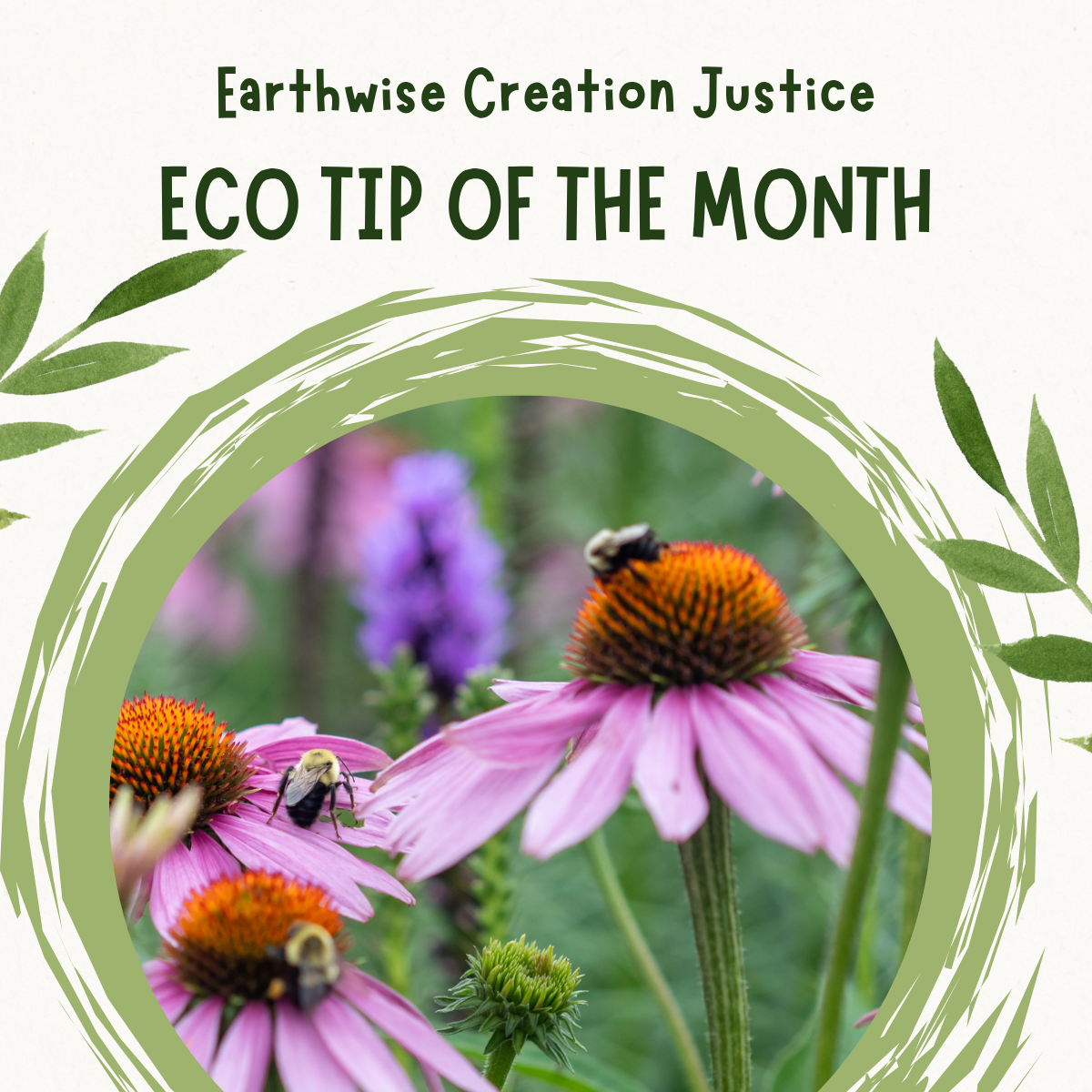
Looking for ways to help out pollinators (and enhance the beauty of your yard)? We have some tips for you.
If you enjoy having a grass lawn but want to give back to the pollinator explore a Bee Lawn. A bee lawn is a lawn planted with grasses that grow slowly and look good with less frequent mowing and flowers that grow low to the ground, can handle trampling, and bounce back after an occasional mowing. Many local nurseries now sell bee lawn mixes, which often contain fine fescue grasses, Dutch white clover, creeping thyme, and self-heal. The seed mix can be spread and established as if you were starting a lawn from scratch, or if you want to incorporate it into a lawn already there follow these steps. First mow the lawn really low, 1 inch or less. Then aerate it, and finally add the seed mix. Topping the planting with straw can improve germination rates.
If you are feeling ambitious and want to plant a pollinator garden or meadow here are some tips to do it on the cheap (although it does require some sweat equity!).
Mow the area you plan to convert low, 1 inch or less. Then cover the area with cardboard. Saving cardboard a month before your project can be a way to collect what you need, or reach out to friends, post on a local buy nothing page, or visit local business (bike shops and nurseries are good) to get your cardboard. Ideally you are looking for non-dyed cardboard with the tape and staples removed. Lay the cardboard out so it overlaps slightly to prevent weeds from popping through in the future. Wet the cardboard thoroughly then cover with a 2-3inch layer of mulch. Free mulch can be picked up from yard waste sites in Ramsey county, or you can use the website Chipdrop to request woodchips to be dropped of by an arborist in the area. Be warned if you use Chipdrop that you don’t control when the mulch arrives or how much you get, usually you get a large load (10-15 cubic yards) but it can be a great way to meet your neighbors and share the bounty if its too much. Once the mulch is spread, wait about 3 weeks or more before planting. When planting push the mulch aside, cut through the cardboard and plant into the ground. (the longer you wait the easier this step is.
For more information check out the University of Minnesota’s Bee Lab website and the following handouts created by Urban Roots.
Guide to Seed Collecting
Pollinator Garden Guide